Neanderthal Brains: Size Doesn't Tell the Full Story
Recent research comparing MRI scans of modern brains with endocasts—internal skull casts—from Neanderthals has upended long-held assumptions. It turns out that brain size varies more among modern humans than between Neanderthals and Pleistocene Homo sapiens. Moreover, brain size is a poor predictor of cognitive ability, suggesting Neanderthals may have been far more like us than previously thought. This Q&A explores the study's findings and what they mean for our understanding of our ancient relatives.
How do Neanderthal and modern human skulls differ physically?
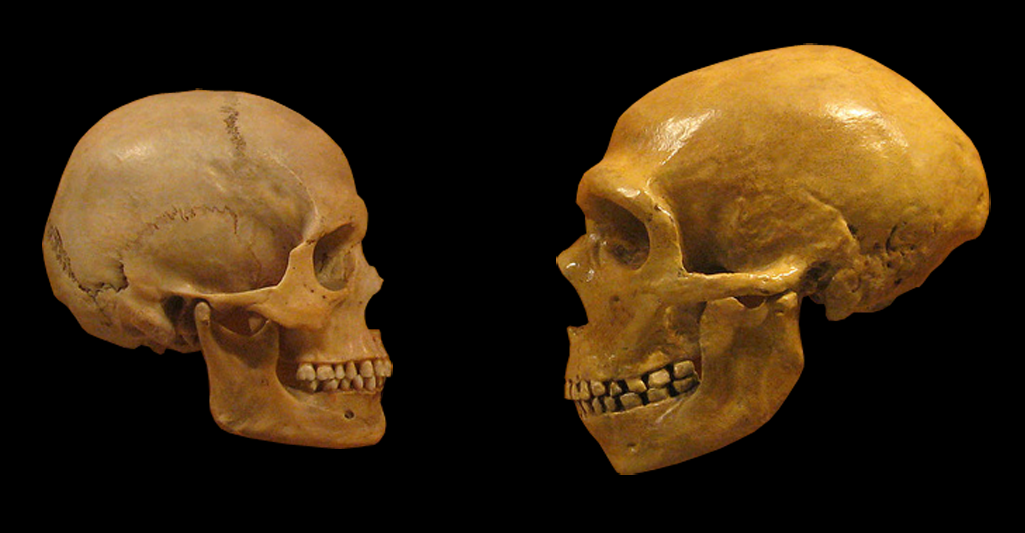
Neanderthal skulls are noticeably lower and longer compared to the rounder shape of Homo sapiens skulls. These external differences have long intrigued paleoanthropologists, leading to speculation about brain structure and function. However, the new study emphasizes that skull shape doesn't necessarily reflect brain shape or size. In fact, when researchers compared endocasts—models of the inner skull cavity that mirror brain contours—they found that Neanderthal brains fall within the range of modern human variation. So while skulls look different, the brains they housed were not as distinct as once believed.
What exactly is an endocast and how is it used in research?
An endocast is a cast or model of the interior of a skull, capturing the shape of the brain that once occupied it. In living people, MRI scans provide similar brain images. For extinct species like Neanderthals, researchers create endocasts from fossilized skulls—either naturally formed by sediment or artificially made with resin. These endocasts reveal the outer contours of the brain, including areas for vision, hearing, and coordination. By comparing Neanderthal endocasts with modern human MRIs, scientists can infer similarities and differences in brain organization. The recent study used this approach to challenge earlier claims that Neanderthal brains were fundamentally different.
What did the MRI study reveal about brain size variation?
The study compared MRI scans of hundreds of modern people with endocasts from Neanderthals and Pleistocene Homo sapiens. The key finding: There is more variation in brain size among present-day humans than between Neanderthals and ancient modern humans. In other words, a typical Neanderthal brain volume overlaps with the lower end of the modern human range, but the extremes of brain size today are far wider. This suggests that Neanderthals were not a separate category but part of a continuum of brain size among hominins. Importantly, the overlap indicates that brain size alone cannot explain behavioral differences.
Does brain size actually determine intelligence or cognitive ability?
No, brain size is a poor proxy for cognitive capability. The study’s authors stress that among modern humans, brain size does not correlate reliably with intelligence, problem-solving skills, or cultural complexity. For example, some geniuses have average-sized brains, while individuals with larger brains may not show enhanced cognition. Factors like neuron density, connectivity, and brain structure matter far more. Applying this to Neanderthals, the fact that their brains were within the modern range means they likely possessed similar cognitive potentials. This aligns with archaeological evidence of their toolmaking, social structures, and symbolic behavior.

What does the archaeological record tell us about Neanderthal capabilities?
The archaeological record paints a picture of Neanderthals as sophisticated hominins. They used complex tools, controlled fire, hunted large game, and buried their dead. Some sites even suggest they created art and ornamentation, such as pierced shells and pigments. These behaviors imply advanced planning, communication, and possibly symbolic thought. If Neanderthals were cognitively inferior, such evidence would be unlikely. The new study supports this view by removing brain size as a barrier to equality. It suggests that Neanderthal culture was not less complex than that of contemporaneous Homo sapiens.
What does this mean for the idea that modern humans outcompeted Neanderthals?
If Neanderthals were as smart and adaptable as Homo sapiens, then our species did not simply outcompete them through superior intelligence. Instead, other factors—such as population size, disease, interbreeding, or climate change—may have contributed to Neanderthal extinction. The study challenges the narrative of a cognitively inferior species being replaced. It suggests that the story of human evolution is more complex, with overlapping capabilities and interactions. This rethinking aligns with growing evidence of interbreeding and cultural exchange between the two groups.
Related Articles
- 6 Tips to Reduce Heap Allocations in Go with Stack Allocation
- Python Insider Blog: New Home, New Workflow – Your Questions Answered
- 10 Things You Need to Know About Python 3.13.8
- 10 Essential Insights into Go’s Source-Level Inliner and go fix
- Kernel 6.19 Update Sparks TCMalloc Clash: Hyrum's Law Strikes Again
- The Slow Grind and the Sudden Leap: How Programming Evolves
- Breaking: .NET 10 Unveils Simplified API Versioning with OpenAPI Integration—Experts Hail as Game-Changer for Developers
- Everything You Need to Know About Python 3.13.8