Vera Rubin Observatory Set to Revolutionize Sky Monitoring: Asteroids, Supernovae, and Interstellar Objects in Focus
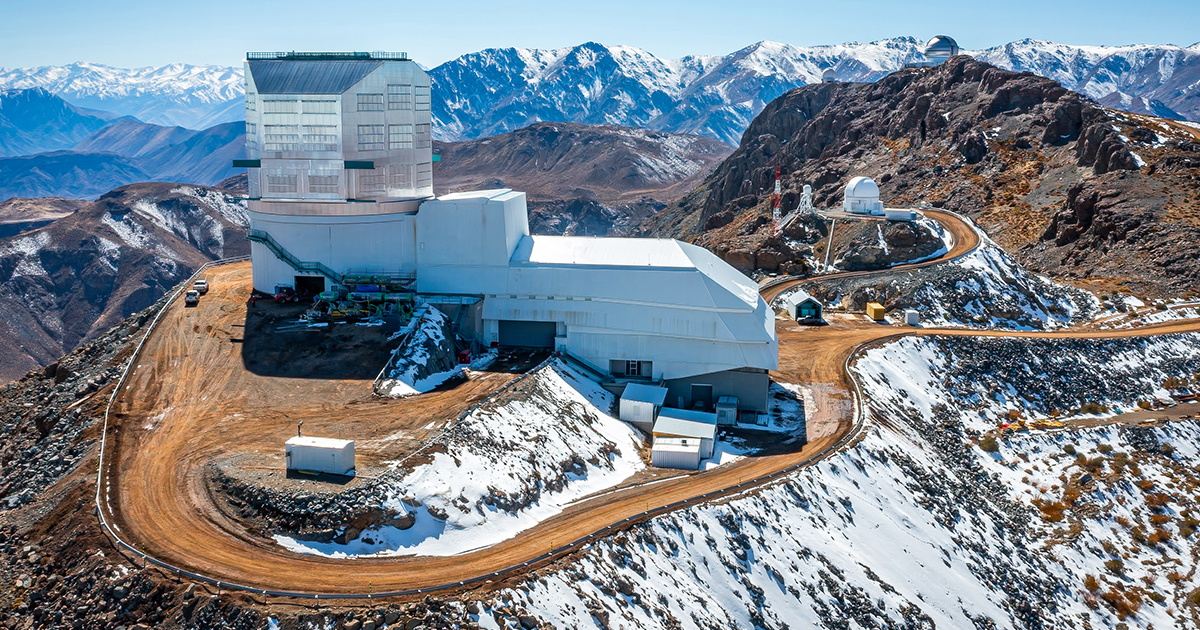
The Vera C. Rubin Observatory in Chile's Atacama Desert is nearing the start of its revolutionary sky survey, promising to detect skyscraper-sized asteroids, failed supernovas, and interstellar visitors with unprecedented frequency. The facility, designed to image the entire visible sky every few nights for a decade, will generate a constant stream of alerts on transient events, fundamentally altering how astronomers track moving and changing objects.
“Rubin will effectively create a high-definition movie of the universe,” said Dr. Sarah T. Stewart, a planetary scientist at the University of California, Davis. “Instead of static snapshots, we’ll see objects appear, move, and fade in real time. This will be a game-changer for planetary defense and stellar evolution studies.” The observatory’s primary mirror, 8.4 meters wide, and its 3.2-gigapixel camera will capture vast swaths of the southern sky, identifying near-Earth asteroids larger than 140 meters and detecting rare supernova explosions.
Background
Originally conceived in the mid-1990s as the Dark Matter Telescope, the project evolved into a general-purpose survey instrument. After years of construction delays, Rubin is now completing final calibration and software checks. First light is expected later this year, with full operations beginning in 2024.
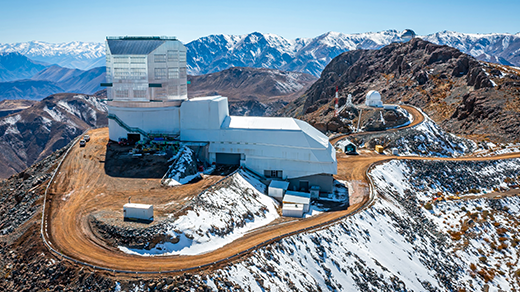
The observatory is named after Vera Rubin, the astronomer who provided key evidence for dark matter. Its primary goal is to map the distribution of dark matter in the universe, but its rapid cadence survey makes it ideal for tracking transient phenomena. Each night, Rubin will produce about 20 terabytes of data, processed in near-real time to issue alerts within 60 seconds of detection.
What This Means
For solar system science, Rubin will complete a census of potentially hazardous asteroids larger than 140 meters, a key recommendation of the 2018 National Near-Earth Object Preparedness Strategy. “We expect to find hundreds of undiscovered objects in this size range,” said Dr. J. L. Galache, a NEO scientist at the Minor Planet Center. “This will dramatically improve our ability to assess and mitigate impact risks.”
For stellar and galactic astronomy, the survey will catch supernova explosions within hours of their onset, including “failed” supernovae that collapse directly into black holes without a bright flash. Interstellar visitors, like ‘Oumuamua, will be identified weeks earlier, giving telescopes worldwide time to study their origins. Rubin’s Legacy Survey of Space and Time (LSST) will also map the Milky Way’s structure and detect faint dwarf galaxies.
The data will be open-access, empowering amateur astronomers and citizen scientists. “Anyone with an internet connection will be able to watch the sky change,” added Stewart. “That’s unprecedented.”
Related Articles
- MIT’s Virtual Violin Simulator: A Revolutionary Design Tool for Luthiers
- Curiosity's Wheels After Six Years on Mars: A Detailed Q&A
- How to Get Up to Speed on Vought Rising and The Boys Franchise Future
- The Exodus: 10 Critical Reasons Teachers Are Leaving the Classroom — and What Schools Can Do
- SpaceX's 34th ISS Resupply Mission: Key Questions Answered
- Hybrid AI Development Surges as Enterprises Bridge Low-Code and Full-Code Divide
- 7 Reasons Why the Fliti Galaxy Projector Is Your Next Room Transformation Tool
- Preserving the Human Glue: A Guide to Balancing AI Efficiency with Team Connection