How Trusted AI Agents Amplify Business Expertise Across the Enterprise
Introduction: The Procurement Dilemma
A senior procurement manager at a mid-market manufacturer faces a familiar challenge. Each quarter, she must decide which of her suppliers require requalification. She weighs delivery trends, open quality incidents, and upcoming contract renewals. Beyond hard data, she also picks up on softer signals—subtle behavioral cues from plant managers, like one who consistently overstates a defect or another who habitually underreports issues. This human intuition, built over years of experience, makes her decisions effective. Yet she can only manage around 200 suppliers this way. Her company has 2,000 suppliers in total. The gap between 200 and 2,000 represents a massive missed opportunity—and a problem that trusted AI agents are uniquely positioned to solve.
The Challenge: Scaling Expertise Without Losing Nuance
Business expertise is often tacit. It lives in the minds of experienced professionals who have learned to read between the lines of reports, interpret body language during negotiations, and spot patterns that spreadsheets miss. However, as companies grow, the sheer volume of suppliers, customers, or internal processes outstrips any individual's capacity. The result is a trade-off: either maintain depth with a small set of relationships, or scale breadth but sacrifice the nuanced judgment that drives superior outcomes.
This isn't just a procurement problem. Similar bottlenecks exist in sales, HR, and operations. Anywhere a handful of experts must oversee hundreds or thousands of entities, the risk of oversight increases. Missed early warning signals, delayed decisions, and inconsistent application of best practices become the norm. The cost is tangible: lost revenue, increased risk, and missed opportunities for innovation.
A Sales Viewpoint
Consider a national sales director trying to prioritize accounts. She knows which clients are loyal, which are at risk of churning, and which have untapped potential. Yet her team manages 500 accounts; she can only personally engage with the top 50. Without AI agents that capture and apply her expertise, the remaining 450 accounts receive generic attention, leading to lower retention and growth.
An HR Perspective
Human resources managers similarly rely on gut feeling to identify high-potential employees or detect early signs of burnout. With thousands of employees, that instinct cannot scale. AI agents trained on the manager's historical decisions can replicate those patterns across the entire workforce, flagging individuals who might benefit from mentoring or additional support.
Operations at Scale
Operations teams monitor production lines, inventory levels, and logistics. An experienced operations manager knows which minor fluctuations signal an impending disruption. But when they oversee dozens of facilities, only a few get that expert attention. AI agents can continuously monitor all facilities, applying the same expert logic to trigger alerts or even take corrective actions.
AI Agents: The Trusted Multipliers
Trusted AI agents are not generic chatbots. They are purpose-built systems that learn from an expert's decision-making process, incorporating both quantitative rules and qualitative judgment. They simulate the expert's logic, but operate at machine speed and scale. In the procurement context, an AI agent would be trained on the manager's past requalification decisions—what criteria she used, how she weighted soft signals, and even the exceptions she made. Once deployed, the agent can evaluate all 2,000 suppliers in hours, surfacing only those that require the manager's human oversight.
How They Learn
Training a trusted AI agent involves more than feeding it historical data. The expert engages in a process of teaching the agent through examples, corrections, and feedback loops. Over time, the agent internalizes not just the explicit rules (e.g., "requalify if defect rate exceeds 5%") but also the implicit heuristics (e.g., "trust Supplier A's self-reports but double-check Supplier B's"). This makes the agent a true extension of the expert, not a black box that might produce counterintuitive results.
Building Trust Through Transparency
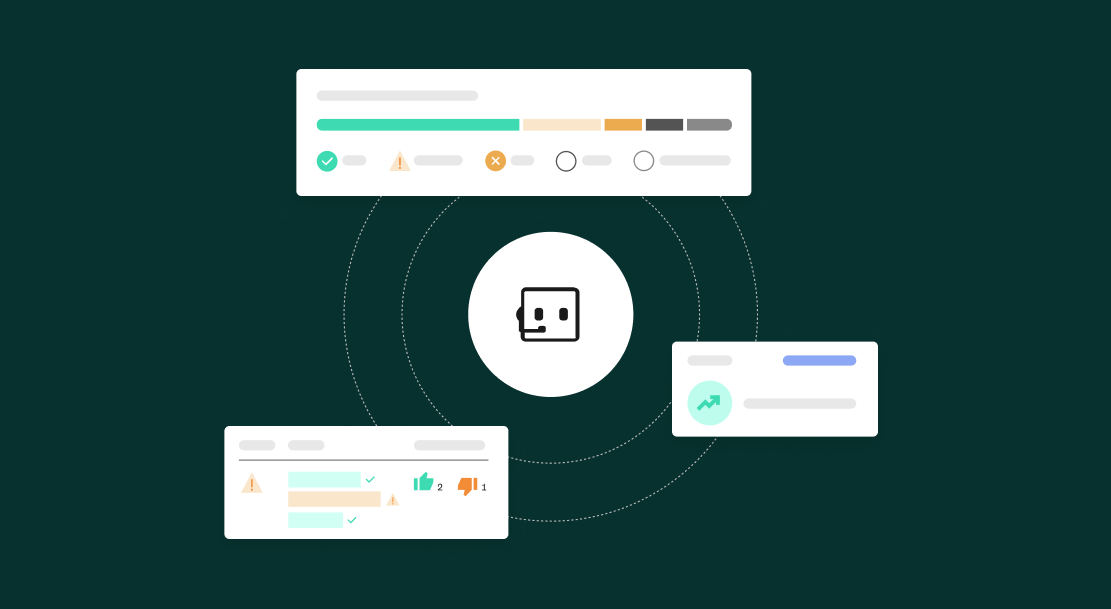
Trust is critical. An AI agent that recommends requalifying a supplier must explain why. Modern agents provide auditable decision trails—showing the specific signals, weights, and comparisons that led to the recommendation. This transparency allows the human expert to override when necessary, and continuously refine the agent's model. The agent becomes a trusted advisor, not a replacement.
Tangible Benefits of Scaling with AI Agents
- Coverage Expansion: From 200 to 2,000 suppliers (or from 50 to 500 accounts) without additional headcount.
- Consistency: Every supplier evaluated with the same rigorous criteria, eliminating biases caused by fatigue or oversight.
- Faster Response: Early signals like a sudden drop in delivery performance are flagged within minutes, not weeks.
- Expertise Preservation: When a key employee retires or leaves, their expertise remains encoded in the AI agent.
- Continuous Improvement: The agent learns from new decisions, becoming more accurate over time.
Making the Transition: Best Practices
Adopting AI agents requires careful planning. Start with a pilot—perhaps the procurement manager's own 200 suppliers. Let her train the agent, review its recommendations, and refine its logic. Only after the agent achieves a high degree of accuracy and trust should it be rolled out to the remaining suppliers. Equally important is change management: experts need to see that the agent augments their role, not automates them out of it. Leaders should emphasize that AI agents handle the routine evaluations, freeing experts to focus on strategic negotiations and relationship building.
Data Quality and Governance
An AI agent is only as good as the data it ingests. Ensure that supplier performance data, contract terms, and incident reports are clean, structured, and accessible. Establish governance around who can update the agent's logic, and how frequently it is retrained. Regular audits help maintain alignment with business goals.
The Future of Expert-Led Scaling
The procurement manager's story illustrates a universal truth: human expertise is the most valuable asset in business, but it doesn't scale without technology. Trusted AI agents bridge that gap, allowing experts to multiply their impact across the entire enterprise. As these systems become more sophisticated, they will not only replicate judgment but also surface insights no human could see alone—combining the best of human intuition and machine scale. Companies that invest in building and trusting these agents today will be better equipped to navigate complexity tomorrow.
Related Articles
- Anthropic Cracks Down on Unauthorized Tokenized Stock Sales, Issues Cease-and-Desist Warning
- BlackRock Expands Tokenized Fund Strategy with New SEC Filing and Securitize Partnership
- Years of Research, Not Hype: Inside IBM's AI Coding Tool Bob and Its 80,000 Internal Users
- How to Unlock the Philippines' Offshore Wind Potential: A Step-by-Step Guide
- 10 Essential Strategies for Building Financial Products That Actually Stick
- Historian Reveals: Opium Was Once a Strategic Weapon Like Rare Earths, Fueling Global Trade and Crisis
- Circle and Lighter Partnership: USDC Becomes Core Stablecoin on Decentralized Perpetuals Exchange
- China AI Supply Chain Stocks Soar 28% as Tech Giants Falter: Market Shift Reveals Investor Preference for Pure-Play AI