From Chaos to Clarity: How Claude Transforms Messy Data into Structured Spreadsheets
Claude is an AI assistant that excels at turning disorganized information into clean, usable formats. Whether you're working with jumbled notes, incomplete records, or completely broken spreadsheets, Claude can analyze the underlying patterns and rebuild your data into a structured spreadsheet. This capability works for both free and paid users, making it a versatile tool for anyone struggling with data chaos. Below, we answer common questions about Claude's data organization abilities.
What is Claude and how does it help with data organization?
Claude is an AI assistant designed to bring order to unstructured information. Unlike spreadsheets that require manual formatting, Claude can take a messy collection of data—like random notes, fragmented entries, or even corrupted files—and reorganize it into a logical, usable spreadsheet structure. It identifies patterns, groups related items, and fills in gaps where possible. For example, if you paste a block of text with prices, dates, and product names mixed together, Claude can parse it into neat columns and rows. This makes it ideal for professionals who frequently deal with raw data or unstructured imports from various sources.
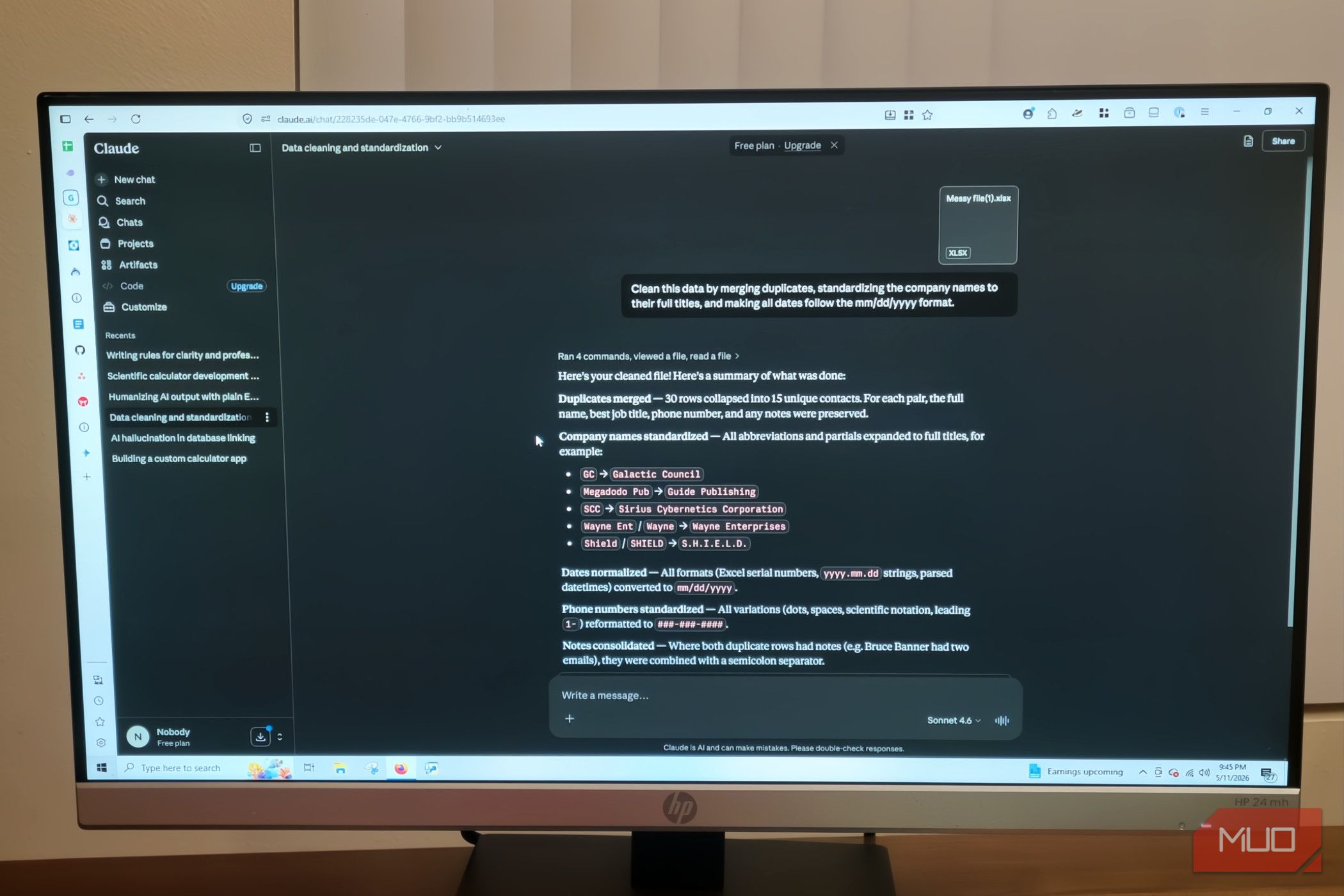
Can Claude handle severely corrupted or broken spreadsheets?
Yes, Claude is particularly effective at handling data that appears unusable. In tests, users have given Claude "clearly screwed up" sheets—examples include files with mismatched headers, random numbers in text fields, or data that was copy-pasted without proper delimiters. Claude analyzes the content, infers the intended structure, and reconstructs a clean spreadsheet. It can ignore irrelevant artifacts, correct obvious typos, and reorder entries. While it may not fix every single error, it consistently produces a usable foundation that saves hours of manual cleanup. The AI's ability to understand context and intent is key here, going beyond simple pattern matching.
Does Claude's performance differ between free and paid subscriptions?
Claude offers both free and paid tiers, and the core data organization functionality works well on both. The free version has usage limits (e.g., message caps per hour) and may process slower, but the quality of the restructured output remains high. Paid subscribers, such as those on the Pro plan, get priority access, longer context windows, and higher usage quotas, which can be beneficial for larger datasets or frequent use. For occasional cleanup of a single broken spreadsheet, the free tier is perfectly adequate. The key takeaway is that Claude's ability to transform messy data into usable spreadsheets is not gated behind a paywall.
What types of messy data can Claude successfully restructure?
Claude can handle a wide variety of chaotic data formats, including:
- Plain text with mixed numbers, dates, and descriptions (e.g., "2023-01-15 Widget 12.99")
- Tables from PDFs or images that lost their formatting when copy-pasted
- CSV files where commas were used inconsistently or columns are misaligned
- Email logs or chat transcripts that need to be organized by date, sender, and subject
- Handwritten notes transcribed roughly into a text file
In each case, Claude identifies the logical structure and outputs a neat spreadsheet with appropriate headers and rows. It's particularly good at recognizing patterns like currency symbols, date formats, and repeated labels. The more context you provide (e.g., a brief description of what the data represents), the better the result.
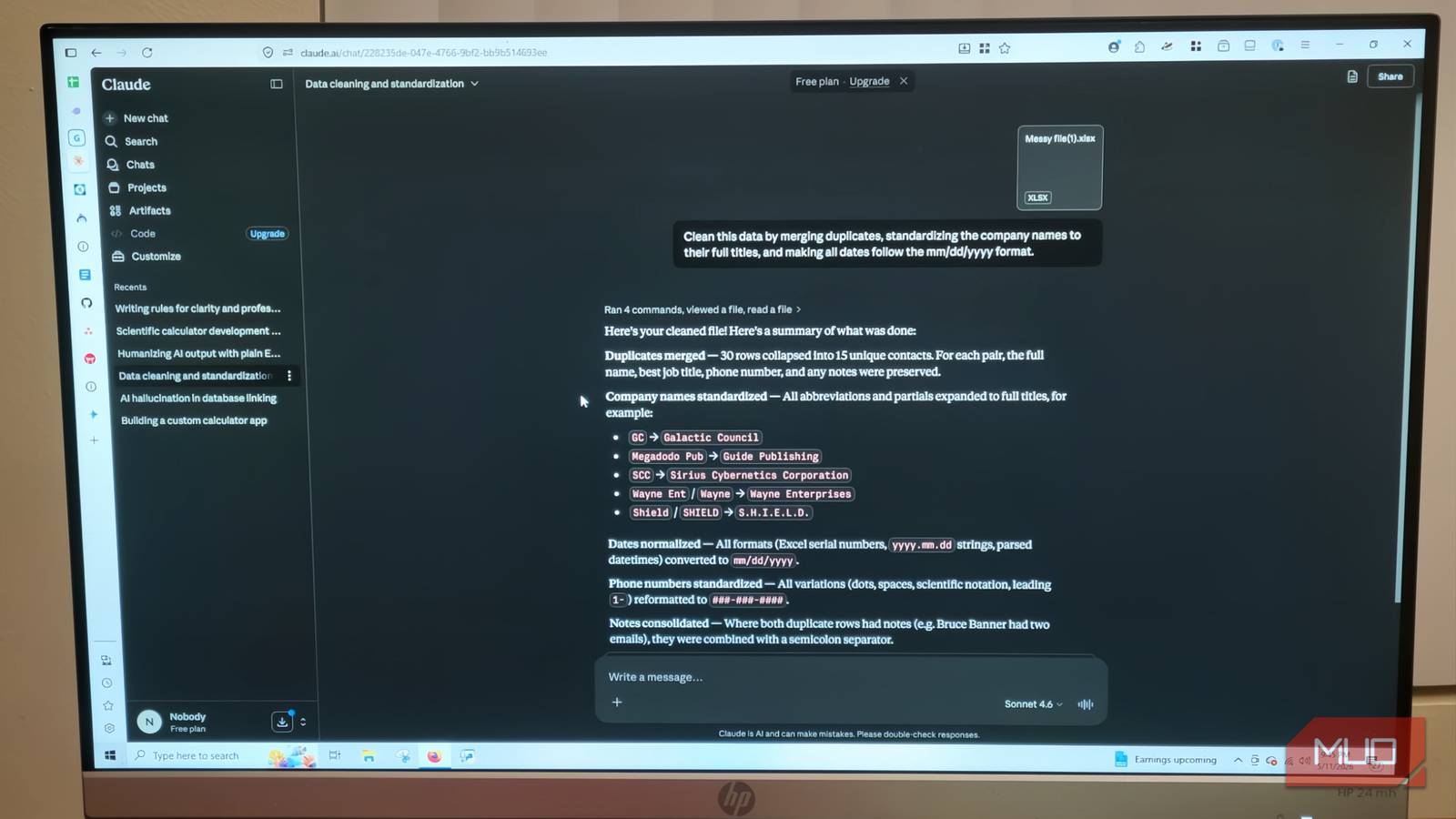
How does Claude's approach to organizing data compare to manual methods?
Manual data organization often involves painstaking steps: scanning for patterns, cutting and pasting cells, writing formulas to separate information, and repeatedly tweaking formatting. This can take hours and is prone to human error. Claude automates this entire process: you simply paste or upload the broken data, and within seconds it returns a structured spreadsheet. For example, a jumbled list of sales transactions that would take a human 30 minutes to sort out can be handled by Claude in under a minute. However, manual methods allow for fine-grained control and can be better for highly unique or context-specific data. For most day-to-day cleanup tasks, Claude offers a dramatic speed advantage with surprisingly accurate results.
What practical steps does Claude take when given a broken dataset?
When you provide Claude with broken data, it follows a logical workflow:
- Analyze the input: It scans the entire dataset to identify patterns, common delimiters, anomalies, and intended categories.
- Infer the schema: Based on the analysis, Claude guesses the column headers (e.g., Date, Name, Amount) and the data types within each column.
- Clean and reorganize: It removes irrelevant characters, fixes formatting inconsistencies (e.g., dates to a standard format), and rearranges rows into a logical order.
- Output a structured table: The final result is a markdown table or CSV-style output that you can easily copy into Excel, Google Sheets, or any spreadsheet tool.
Claude may also ask clarifying questions if the data is too ambiguous, ensuring the final spreadsheet matches your expectations. This step-by-step process makes it a reliable assistant for data cleanup tasks.
Related Articles
- Why Camera Phones Are Making a Comeback—and Why the US Is Missing Out
- How to Safely Mix Linux Distribution Packages with Distrobox
- Unlocking Community Wisdom: A Modernized Approach to Facebook Groups Search
- RingCentral's AI-First Evolution: From UCaaS to Intelligent Engagement
- Why the Toyota Corolla Cross Hybrid Outshines the RAV4
- 10 Ways to Revolutionize Utility Software Design: From Chore to Delight
- How to Overhaul Facebook Groups Search for Richer Community Discovery
- YouTube's New Streaming Shows: 10 Ways It's Winning Creators and Advertisers